
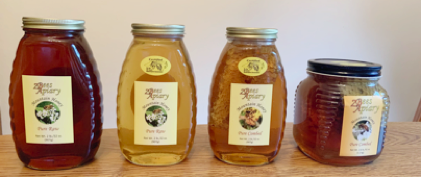
ZBees liquid gold... fresh from the colonies!

Lifetime member of the North Carolina Beekeepers Association
Welcome... to Backyard Beekeeping
At ZBees Apiary, we understand these following truths about beekeeping that help to preserve a healthy apiary. First, the Creator God placed the honey bee in this world to benefit humanity and the environment. “He has brought us to this place and has given us this land, a land flowing with milk and honey;” (Deut 26:10). Reverend Lorenzo Lorraine Langstroth (1810-1895), the father of American beekeeping, understood this truth and the Langstroth design became the standardized beehive in America. Second, beekeepers (not people who just keeps bees) must stay abreast of honeybee trends and events by reading books, magazines, web articles, blogs, or watching videos and then, put that new knowledge into practice. Third, each time you discuss beekeeping with other beekeepers you need to learn something new. Remember, every hive within the apiary is different and beekeepers manage them with different methods. Lastly, beekeeping is a science and it calls for proper apiary care. Never view beekeeping as a hobby. Hobbies are “mood based.” Example: If I am not “in the mood” to play guitar and write songs, then I can stop playing for a while and leave the guitar in its case. The only affect is the strings may lose their tonal quality if I ignore this hobby too long.
Climate conditions affect the temperament of honeybees and their attitude changes from day-to-day. At times, honeybees may become highly defensive during cloudy days, honey flows, or possibly the beekeeper did something mistakenly to arouse their sting. Reverend Langstroth offers this analysis of honeybee behavior;
Honey in the Bible…
- Matthew 3:4; Mark 1:6 - with reference to John the Baptist eating locust and wild honey.
- Revelation 10:9-10 - with reference to the sweetness of honey.
- Exodus 16:14-31; Numbers 11:7, 8 - manna (KJV) from heaven was God's substance for the Israelites and was liken to the taste as honey, sweet to those who hunger.
The Magic of Honey Bees and Pollination
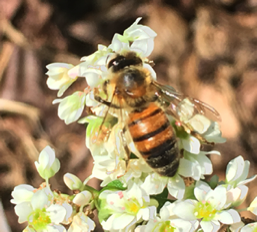
Western honey bees (Apis mellifera) are excellent pollinators for the environment and without their hard work roughly a third of all food supplies would be missing from our stores. If you know a beekeeper, then thank them for what they do for the environment and to help place food on your table.
At ZBees Apiary, we promote beekeeping as a science by making our environment a better place. Our honey is exactly what the bees put in the comb… minus the wax for those who do not prefer “combed honey.” In addition, our honey is labeled “Mountain Honey” to distinguish it from honey harvested in the piedmont or coastal regions of North Carolina.
Take time to plant honeybee friendly foliage and flowers around your home and help the bees find places of nectar and pollen. In the mountains of western North Carolina, plant fall flowering foliage is scare through the first frost, as most tree pollens and nectars are gone by early October.
There is no guarantee or magic bee suit which prevents the beekeeper [beek] from getting stung during any apiary inspection. Any sudden movement or sharp noise can change the honeybee's normal behavior and therefore, they become “actively” defensive. During the 1850's, one of Langstroth's observations focused on the fury of “defensive” honey bees. Beekeepers could unintentionally arouse their sting because of the slightest of movements. If you drop a frame of bees, then prepare yourself for the onslaught of attacks. If you blow on them with your breath, or crush them during inspections then, their temperament changes in an instant as stingers appear and swarms of defensive bees gather about you. Sounds a lot like the way we act when someone treats us with carelessness or indignity. I have personally experienced such behavior, especially while inspecting hives during honey-flows. During some inspections the beek realizes how honey bees do not like the removal of an upper brood box from the hive body, even though they need to inspect the lower one. In one instance during a honey flow, I removed the upper box for inspection and set it down on an upturned telescoping roof. Immediately, the attitude of the bees in the lower box changed from “calm” to “jittery” as suddenly they came flying out with stingers actively seeking a target- me! Consider this analogy, “You live in a two-story house and suddenly the Jolly Green Giant lifts the roof off your home while you are still inside. How would you feel?" That's right, you are upset, angry, or ready to strike out at whatever ruined your day and invaded your home.
May your journey through this site give you a better understanding of the importance of the divine connection between honey bees, humanity, the environment, and God. ZBees sells only pure and raw honey, just as it was in the honeycomb. ZBees filters out the excess wax or bee parts, and never the pollen content. We never heat, pasteurize, ultra-filtered, or diluted our honey with any other product. What you taste is exactly how God intended it to taste- sweet to the tongue and good for the body.
Rev. David Zachary
NC Certified Honey Producer and Beekeeper
“I deem it important to show clearly, in every outset, how bees may be managed, so that all necessary operations may be performed in an Apiary, without incurring any serious risk of exciting their anger” (Langstroth on the Hive and the Honey-Bee: A Bee Keeper’s Manual, 1853, 23).
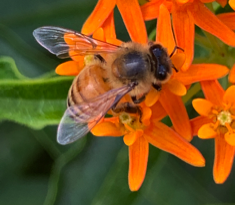
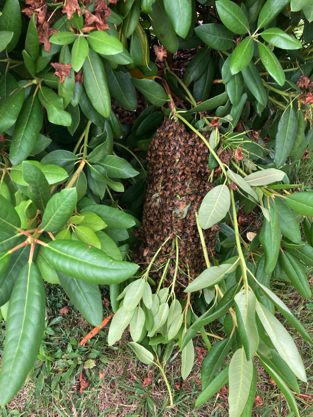
Catching a swarm of about 25,000 Italian honey bees.
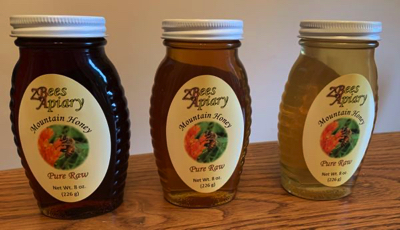
Remember the next time you see a honey bee... that they are great pollinators...and as such, the grocery stores can continue to provide us with lots of fruits, nuts, and vegetables to place on our dinner table!